---
canonical: "https://www.jsolly.com/blog/how-to-implement-subresource-integrity-django/"
title: "Improving Security With SRI: From F to B on Mozilla Observatory"
description: "Learn how to implement SRI and improve security, including how to generate cryptographic hashes and use the django-sri module | A Step-by-step guide"
author: "John Solly"
published: "2022-05-21T19:42:17.000Z"
updated: "2024-11-06T13:35:07.129Z"
---
# Improving Security With SRI: From F to B on Mozilla Observatory

https://technofaq.org/wp-content/uploads/2016/12/hacker-.jpg
> Subresource integrity is a recent W3C standard that protects against attackers modifying the contents of JavaScript libraries hosted on content delivery networks (CDNs) in order to create vulnerabilities in all websites that make use of that hosted library.
>
> [Mozilla Infosec](https://infosec.mozilla.org/guidelines/web_security#subresource-integrity)
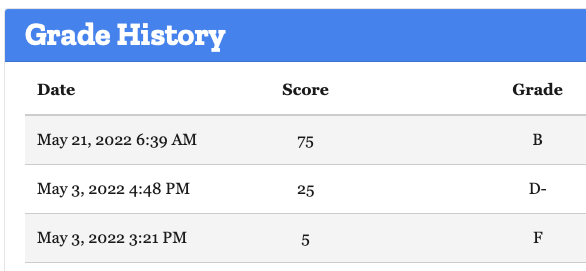
Earlier this month, I ran a [Mozilla Observatory Audit and got an F](https://www.jsolly.com/blog/how-to-get-a-perfect-mozilla-observatory-score/). I implemented SRI in [this PR](https://github.com/jsolly/awesome-django-blog/pull/67/files), which [upgraded my score to a B](https://observatory.mozilla.org/analyze/blogthedata.com) !
To implement SRI, you add a cryptographic hash to each and `
I don’t love this approach because it obfuscates how the resulting HTML will look.
I also encountered problems with django-sri. I couldn't get their hashes to work with my JavaScript files. Every time I used their tag, I got a 500 error on my server and there wasn't anything in the apache error log. The second issue was that django-sri does not seem to work with non-text files. Three of my `` tags point to favicon .pngs. When hashing these files, django-sri threw uncaught utf-8 parsing errors.
My workaround was to generate the hashes myself using the openssl library.
$ openssl dgst -sha384 -binary prism_patched.min.js | openssl base64 -A
I don't have any strong opinions on hashing algorithms for a personal blog. It's good enough for me that sha384 is a [nist approved hash function](https://csrc.nist.gov/Projects/Hash-Functions/NIST-Policy-on-Hash-Functions).
After generating the hashes, I plugged them into the integrity values manually. The disadvantage is that I'll have to re-compute the hash if I change a resource. Luckily, I don't plan to modify my favicons. They are static assets.
After implementing SRI, I re-ran the Mozilla audit and was still getting flagged for non-compliance. Observatory doesn’t show which resources are missing integrity hashes. Luckily, I came across a GitHub repo called [sri-check](https://github.com/4armed/sri-check) put out by a UK-based security company. It's a Python script you can point at any URL to tell you which resources don’t have SRI. It detected a JavaScript file hidden in one of my templates I hadn't hashed. After adding a hash and re-running the Mozilla audit, I got a green check mark and upgraded my score from a D- to B- !!!
## Conclusion
SRI boosts site security by preventing CDN attacks. Many packages, like bootstrap, offer SRI protection out of the box, but I found several dependencies on my site without it. For those CSS/JS files, I hosted them locally on my server. I generated hashes using a combination of the django-sri module and the openssl library. My final security task to get a perfect score on Mozilla Observatory is to [add a Content security policy](http://github.com/jsolly/awesome-django-blog/issues/41). Expect a future post about that adventure!
May 21, 2022 in [Web Dev](https://www.jsolly.com/blog/category/web-dev/)
Updated November 6, 2024