---
canonical: "https://www.jsolly.com/blog/simplifying-ai-writing-template-complex-concepts/"
title: "Simplifying AI Writing: Template for Breaking Down Complex Concepts"
description: "Use a writing template to simplify understanding and working with AI prompts, applying writing fundamentals to create well-crafted final outputs."
author: "John Solly"
published: "2023-01-17T19:34:29.637Z"
updated: "2023-01-17T19:34:29.637Z"
---
# Simplifying AI Writing: Template for Breaking Down Complex Concepts
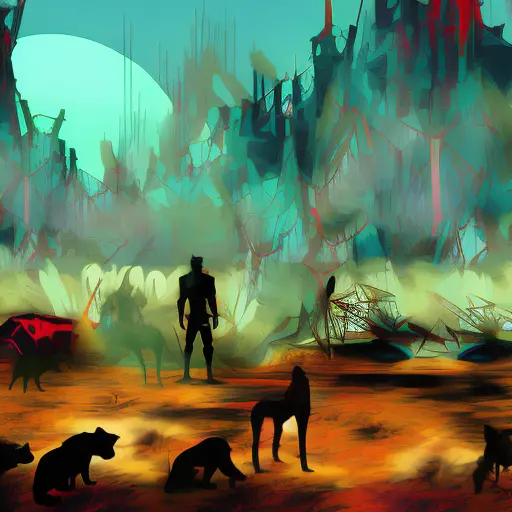
AI prompts can often seem like complex and mysterious processes. I've broken them into essential components to better understand these concepts. The following is a list of critical elements that make up a piece of writing, designed to be as broad and general as possible to be applied to various writing subjects.
## Aspects of Writing
- Level of Detail (Detailed, Concise)
- Length (One sentence, four Paragraphs)
- Structure (Haiku, poem, essay, Article, short story, novella)
- Setting (Small Town, Post-Apocalyptic Wasteland, A Magical Forest)
- Genre (Action, Romance, Drama, Western, Journalistic Writing)
- Story elements (Conflict, suspense, resolution, climax, setting)
- Word Choice (Idioms, Figures of Speech, Slang, Jargon, Imagery, metaphors, similes, dialog, rhyme, alliteration)
- Perspective (First-person, second-person, third-person, omniscient, limited omniscient, objective)
- Pacing (Fast, Slow, variable)
- Tone (Humorous, Inspiring, Professional, Casual, Mocking, Persuasive)
## Using The Template
Here's a prompt I am using when I am using ChatGPT for writing.
> Write a \[Length\], \[Pacing\] paced, \[Level of Detail\], and \[Tone\] \[Structure\] in the \[Genre\] genre set in a \[Setting\] with \[Story Elements\] and \[Ammount\] \[Word Choice\] from the \[Point of View\] point of view. \[Story Prompt\]
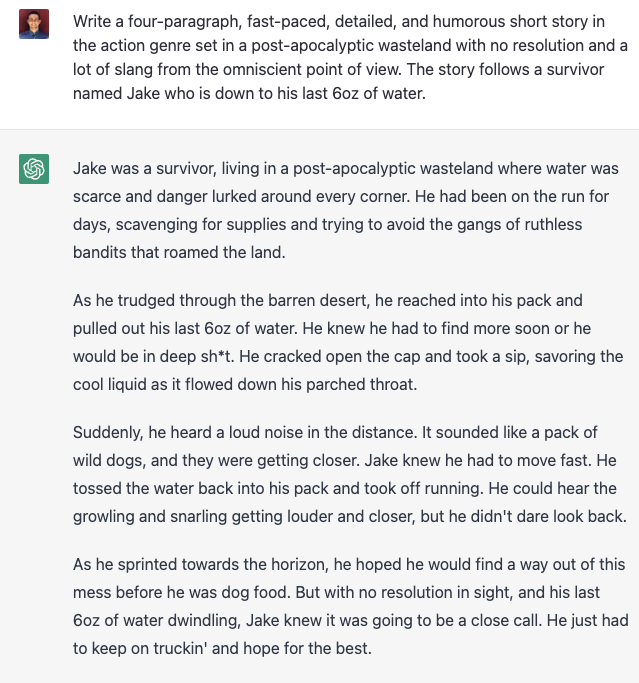
## A Short Story
> Write a four-paragraph, fast paced, detailed, and humorous short story in the action genre set in a post-apocalyptic wasteland with no resolution and a lot of slang from the omniscient point of view. The story follows a survivor named Jake who is down to his last 6oz of water.
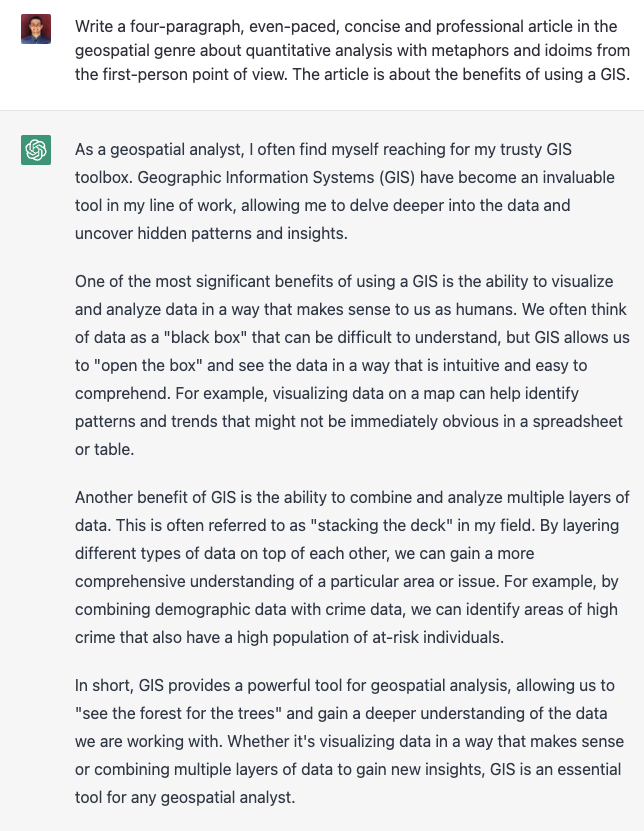
## Professional Writing
> Write a three-paragraph, even-paced concise and professional article in the geospatial genre about quantitative analysis with metaphors and idoims from the first-person point of view. The article is about the benefits of using a GIS.
## Conclusion
Working with a template is a great way to get the most out of GPT's capabilities. By providing GPT with a specific structure and guidelines, I can have more control over the final output. Instead of leaving it up to GPT to decide on the tone, pacing, and other variables, I can specify them explicitly. This way, I can ensure that the final output aligns with my intended style and purpose. Additionally, using a template can also save time by reducing the need for editing and revisions. It can also be helpful in situations where you want to maintain consistency within a series of texts, for example, an article series or a book. Overall, a template can be a powerful tool for creating high-quality and coherent text with GPT.
January 17, 2023 in [Productivity](https://www.jsolly.com/blog/category/productivity/)
Updated January 17, 2023